Featured

Explore 5th Axis RockLock™ Tombstones

• Modular, fast-change tombstone systems for horizontal machining centers

Vises / Self-Centering Vises

Self-Centering Vises

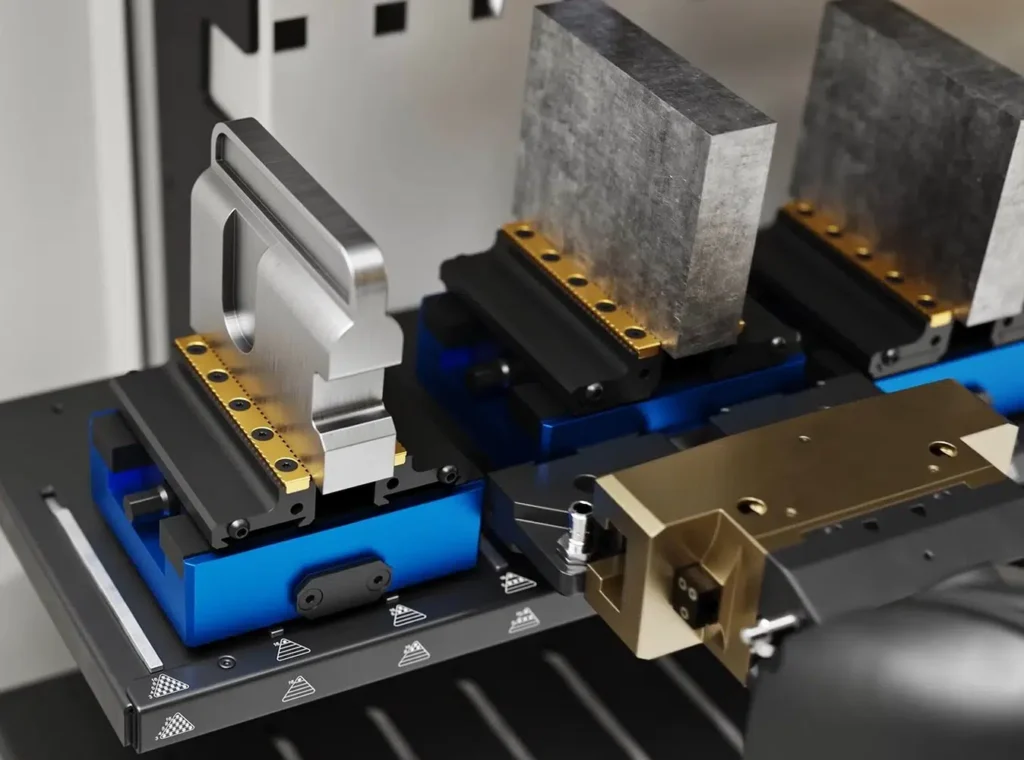
Both jaws ride a single left- and right-hand leadscrew, closing toward the same centerline every turn, no measuring, no shimming, no guessing where the stock actually sits.

Shop by Size

Pick your self-centering vise.

Three body sizes, one centering mechanism. Choose the width that matches your part, then order it with jaws or bare if you’re running your own. Every model mounts on the RockLock™ system at standard 52mm or 96mm spacing.

The Problem

A fixed jaw moves your datum every time the stock changes.

On a standard vise, one jaw is fixed and the part’s center shifts with every change in stock width. A few thousandths of saw-cut variation become a re-probe, a work offset edit, or a part that’s off-center on all five sides. A self-centering vise closes both jaws toward the same centerline, so the datum stays put and the program finds the part where it expects it, load after load.
±.0005"
Repeatability from load to load, so the part lands on the same center every cycle.
25.1 kN
Clamping force to hold the part on center through heavy 5-axis cuts.
+30%
More clamping force and rigidity from four-bolt X-Series jaw mounting versus the original two-bolt design.

Why It Matters

Same center. Every part.

Every minute spent shimming, re-indicating, and chasing repeatability is a minute your spindle isn’t cutting. Here’s what a self-centering vise gives back.
01 Fixed Centerline Every Load
Both jaws close toward the same center regardless of stock size, so the part's datum never shifts.

Machine Compatibility

Two ways to mount.

Quick-change on 52mm or 96mm RockLock™ pull stud spacing. Steel-body vises can also direct-mount top-down like a traditional vise, using socket head cap screws and removable dowel locators.

Compatible across platforms including:

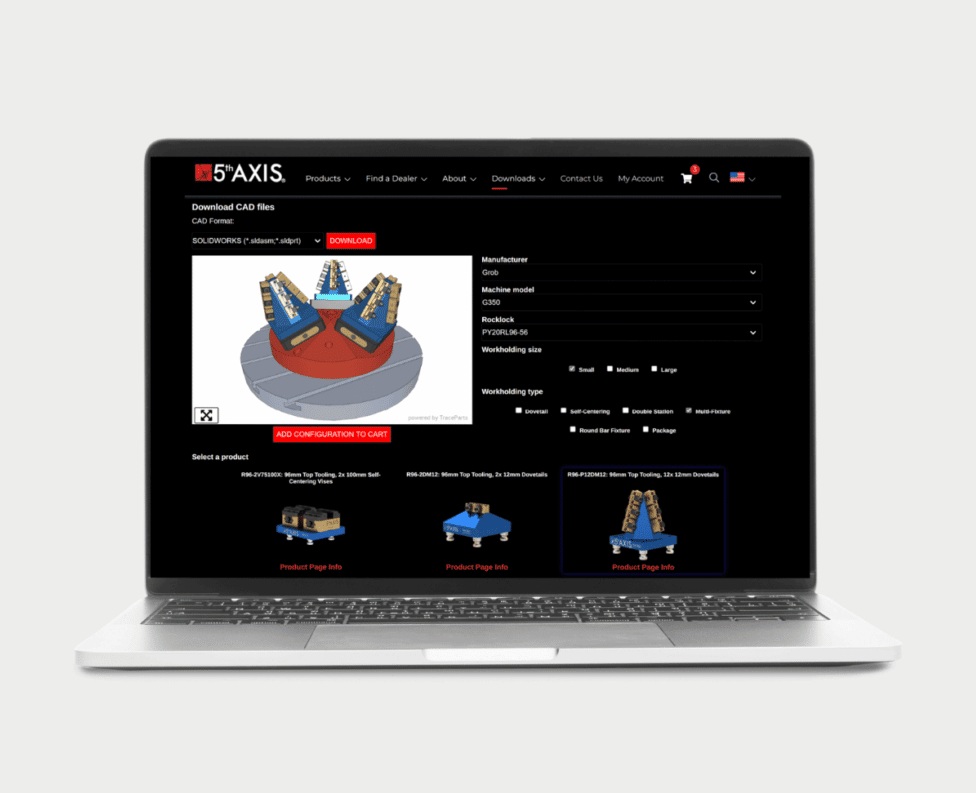
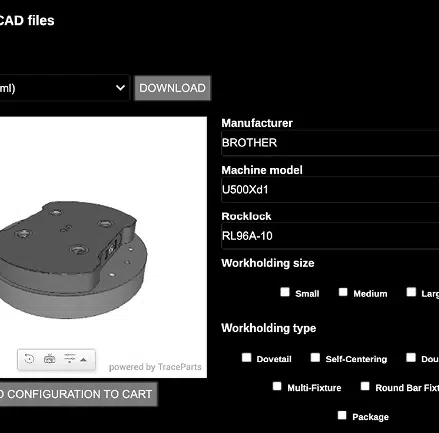
Choose your machine and vise to preview the exact compatible setup.

Customer Stories

Shops Like Yours Are Already Running 5th Axis.

From job shops to high-volume production floors, machinists trust 5th Axis to hold the line.

Common Questions

Frequently Asked

Questions.

Both jaws ride a single leadscrew, closing toward the same fixed center every turn, regardless of stock size.
Standard serrated hard jaws are built for Op 1 roughing. Use machinable soft jaws (aluminum or steel) for any clamping on finished surfaces.
Yes — standard 52mm or 96mm pull stud spacing, compatible with RockLock™ and competitive quick-change bases.
Yes, every vise has a downloadable 3D model for CAM programming and clearance checks.

A standard 45-degree dovetail is built into the back of the standard hard jaw. This is an optional feature and will not get in the way if you choose not to utilize it. We recommend utilizing the dovetail when machining hard materials or where the stock size is larger than the opening of the vise itself.

The hardened serrated gripper teeth are built to bite directly into raw material. We recommend utilizing the serrated gripper teeth with for stock with a hardness under 35 HRC. For material with hardness over 35 HRC we recommend utilizing the dovetail or custom soft jaws.

Yes, the standard hard jaw features a smooth face, serrated gripper teeth and an integrated 45-degree dovetail. The standard hard jaws are built for Op 1 roughing and we highly recommend utilizing soft jaws for clamping on any finished surfaces.

5th Axis vises are compatible with all 3, 4 and 5-axis CNC machines.

Selecting the right self-centering vise is crucial for maximizing stability, efficiency, and machining accuracy. The right vise depends on your part size, machine type, and workholding needs. Check out our 3D configuration tool to find the best workholding for your application:

Key Factors When Choosing a Vise

Part Size & Clamping Range
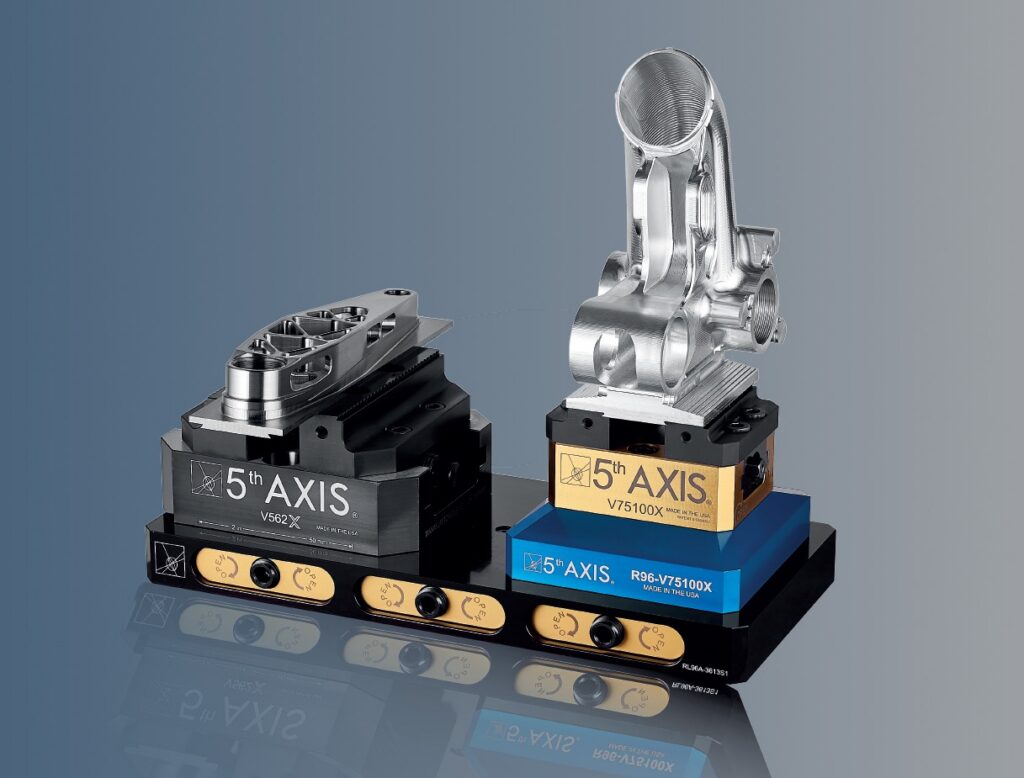
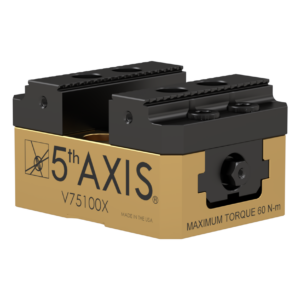
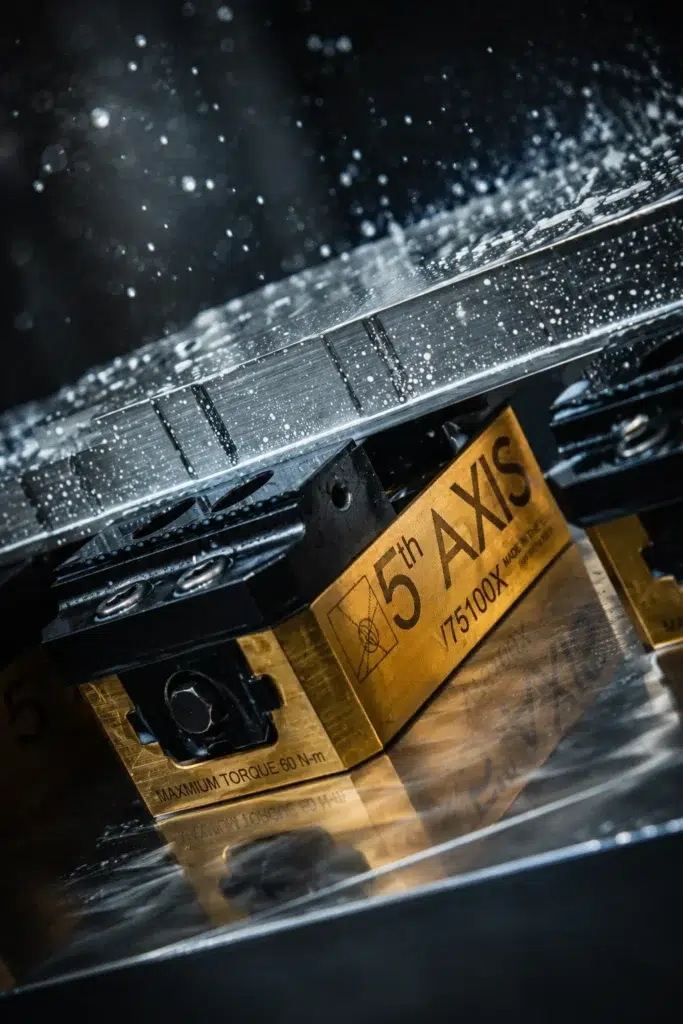
V75100X (Compact 3” Vise) – Best for small to medium parts and tight machine envelopes.
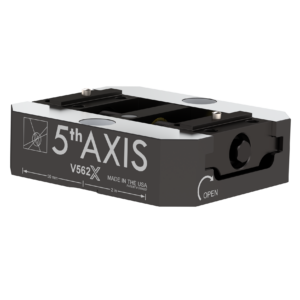
V562X (5” Standard Vise) – Our most versatile option, ideal for a wide range of part sizes.
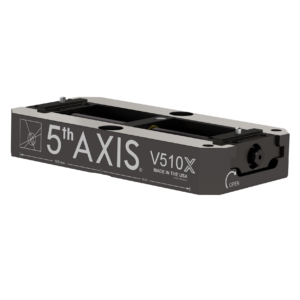
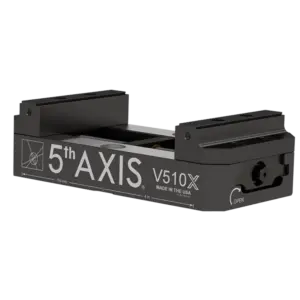
V510X (Large 10” Vise) – Designed for larger parts and heavier cutting forces.
Machine Size & Work Envelope
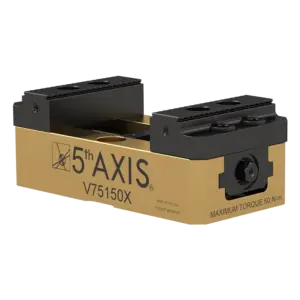
Smaller 3-, 4-, or 5-Axis Machines → Use a compact vise (V75100X, V75150X) for better tool access.
Larger Machines & Horizontal Setups → A larger vise (V510X) can handle bigger parts and aggressive cutting.

Material & Machining Forces
Light-to-Medium Machining (Aluminum, Plastics) → A smaller vise can typically handle the job.
Heavy-Duty Machining (Steel, Titanium, Inconel) → Choose a larger vise for better rigidity and holding power or utilize the 45-degree dovetail integrated into all standard vise hard jaws.

Workholding Density & Fixturing
Single-Part Machining? → A standard vise like the V562X offers the best versatility.
Multiple-Part Setups? → Use smaller vises in a high-density setup to increase throughput.
Automation & Palletization? → Consider a vise compatible with the RockLock™ Quick-Change System for fast swaps.
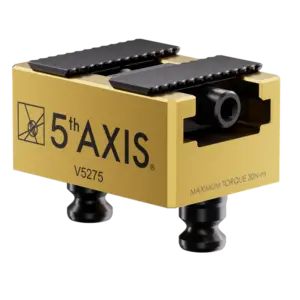

Yes, 5th axis vises can be used in the EDM environment. We have many customers that move vises from the mill to the EDM. All 5th Axis vises are built from hardened tool steel. Most models are coated with PVD or black oxide. We recommend that customers who utilize 5th axis vises inside the EDM do not leave them in the tank while not in operation. Properly drying the dovetail fixtures after they are removed from the EDM will prevent rusting.

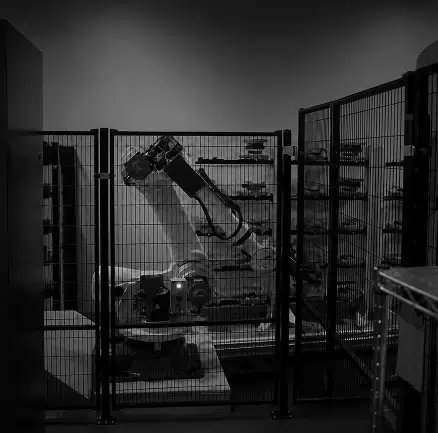
Yes, most of 5th Axis vises were designed and optimized around automation systems. The self-centering vises can be mounted from the top down or used with the RockLock quick-change system. Utilize the 3D machine configuration tool to figure out what vise works best for your application.

All 5th Axis self-centering vises feature industry standard 52mm or 96mm pull stud spacing. This means they are RockLock ready. It also means that all vises are compatible with competitive systems utilizing the 52mm and 96mm pull stud spacing. The line of steel vises can also be directed mounted from the top down like a traditional vise using standard socket head cap screws and dowel locators. The dowel pins are removeable so if you run into an application where you need to direct mount the vise to the t-slot table, you can simply remove the dowel pins. We recommend using the dowel pins when mounting the vises onto a subplate or pallet.